Books

As a former CIA Agent, John Kiriakou has a unique perspective. Everyone has a range of activities for which they will say “Yes” or they will say “No.” John shares his experience in CIA as well as time done in a federal prison as punishment by the CIA for confirming that, indeed, the United States was engaging in prisoner torture.
His books are not only well-written but extremely intriguing. Links for purchase are included in the list below.
The good news? John has more books in the works. Stay tuned.
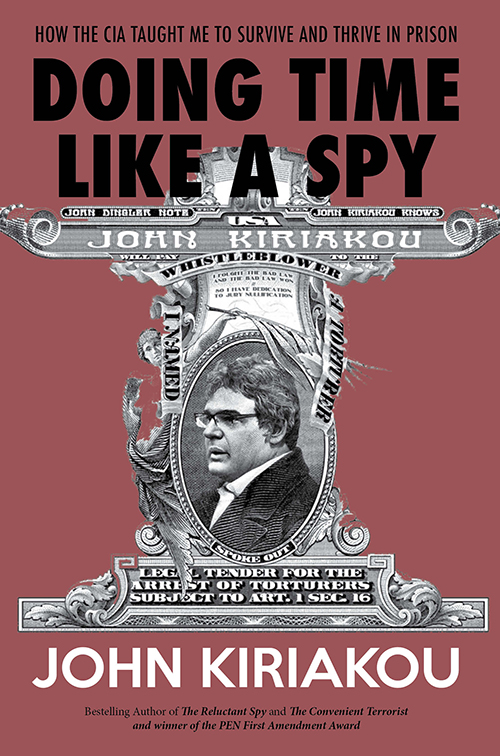
Doing Time Like a Spy
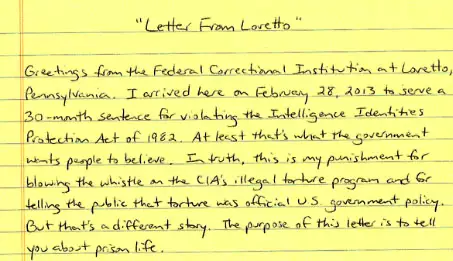
No one who has had the misfortune of being incarcerated in the U.S. prison system can say that it was a cakewalk. But one thing John Kiriakou realized early on is that the very system that failed him is the same one that gave him training to survive better than most during his prison time.
From his refusal to address prison wardens and guards as “Sir” to being able to discern the lies in almost all of the communications he engaged in with prison staff and officials, John’s training as a CIA counterterrorism operations officer gave him a perspective of strength. His career in the CIA was no lightweight experience and it served him well.
As John says in the Epilogue of his first book, The Reluctant Spy, that no one could have imagined.
Doing Time Like a Spy is John’s account of how he used 20 life lessons the CIA taught him to “survive and thrive” in prison. It is a humorous, and still serious, account of day-to-day prison life, of the challenges all prisoners face, and of how John overcame the obstacles thrown in his path.
Here’s what people are saying about Doing Time Like a Spy:
“With a touch of humor and more than a bit of irony, Kiriakou sheds light on the sad reality that his CIA training amply prepared him to thrive in a US prison. What should outrage the rest of us is that Kiriakou was in prison at all! In fact, Kiriakou’s gentleness is on full display in this book—which makes his circumstances more understandable and outrageous at the same time. And it causes me to ask, ‘How can we ever call it a ‘Justice’ system when an act of conscience that exposes US state crimes is punished and not those who authorized the crimes?’” — Congresswoman Cynthia McKinney
“John Kiriakou has done things the hard way, standing up to federal authority for years. The CIA couldn’t silence him when, after fifteen years as an analyst and operations officer, he said the CIA was torturing its prisoners, an act of heroism that cost him two years of his freedom. The Bureau of Prisons couldn’t silence him when, wrongly-confined, he exposed waste, fraud, abuse, and illegality in the prison system in a series of blogs that put him under constant threat of solitary confinement. And he did it all without losing his sense of humor. Doing Time Like a Spy is a must read.” — Daniel Ellsberg, whistleblower and author of Secrets: A Memoir of Vietnam and the Pentagon Papers
“Kiriakou confidently portrays himself as a larger-than-life survivor type, justifiably proud of his stance against CIA-sanctioned torture. Doing Time Like a Spy is an irreverent and unsettling footnote to the war on terror.” — Kirkus Reviews
The Reluctant Spy: My Secret Life in the CIA’s War on Terror
The Reluctant Spy: My Secret Life in the CIA’s War on Terror, published in 2009, was John Kiriakou’s first book, co-authored with Michael Ruby. John has two more books scheduled for publication later this year, Letters from Loretto: A Prison Journal and Doing Time Like a Spy: How the CIA Taught Me to Survive and Thrive in Prison.
The Reluctant Spy: My Secret Life in the CIA’s War on Terror details John’s years with the CIA and the beginning of his legal problems, when John told ABC News in an interview in December 2007 that the CIA was torturing prisoners, that that torture was official U.S. government policy, and that the policy was approved by the President. John was driven to ruin by the U.S. Justice Department because of these revelations.
The national debate on waterboarding and other forms of torture caught a second wind early in Obama’s presidency, and John is proud to have played a small part in that debate. In a larger sense, this is not an American conversation that has ended. If we have learned anything since 9/11, we know that a tension exists between protecting our national security and ensuring that human rights are guaranteed according to the will of our Founding Fathers when they authored the U.S. Constitution.
Our challenge, in a world of unprecedented threats, is to strike a balance between the polarities—to find that place where the national security and human rights can live reasonably, if not comfortably, side by side. It won’t be easy. But then, it never was.
The Reluctant Spy is a fascinating book, which will give you chills when you realize that what John Kiriakou experienced at the hands of the Justice Department could happen to anyone. The book rose to #5 on the Washington Post political bestsellers list in March 2010.

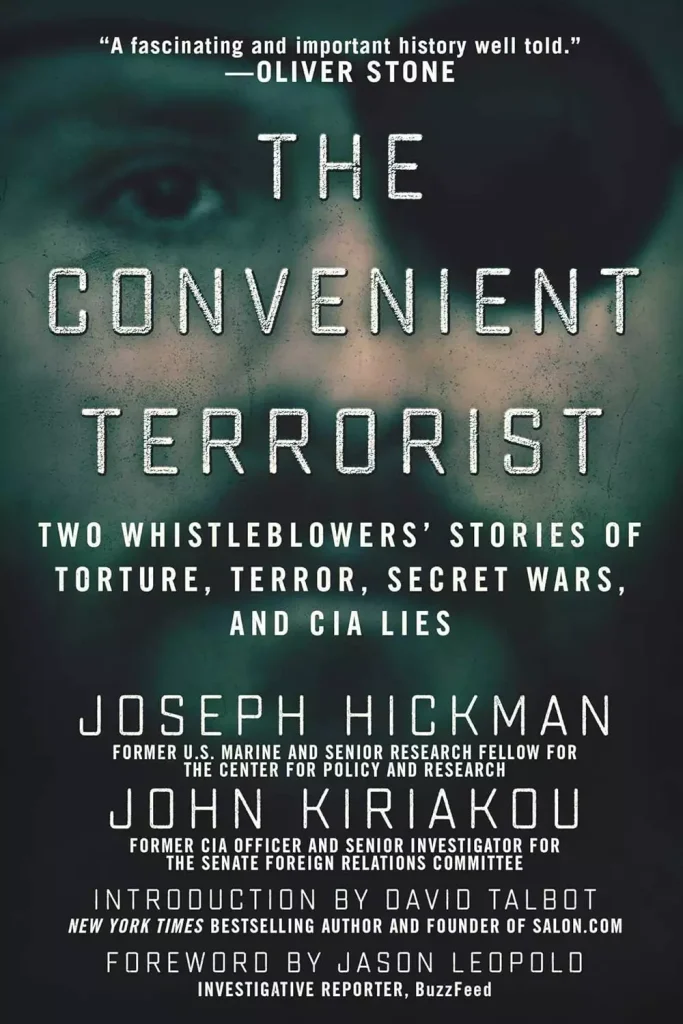
The Convenient Terrorist: Two Whistleblowers’ Stories of Torture Terror, Secret Wars and CIA Lies
Written by John Kiriakou and Joseph Hickman, this book is a startling spotlight on the darkest corners of America’s ‘War on Terror,” where nothing is quite what it seems.
The Convenient Terrorist is the definitive inside account of the capture, torture, and detention of Abu Zubaydah, the first “high-value target” captured by the CIA after 9/11. But was Abu Zubaydah, who is still being indefinitely held by the United States under shadowy circumstances, the blue-ribbon capture that the Bush White House claimed he was? Authors John Kiriakou, who led the capture of Zubaydah, and Joseph Hickman, who took custody of him at Guantanamo, draw a far more complex and intriguing portrait of the al-Qaeda “mastermind” who became a symbol of torture and the “dark side” of US security. From a one-time American collaborator to a poster boy for waterboarding, Abu Zubaydah became a “convenient terrorist” and a way for US authorities to sell their “War on Terror” to the American people.
Joseph Hickman spent most of his life in the military, first as a Marine, then as a soldier in both the Army and the National Guard. He has deployed on several military operations throughout the world, sometimes attached to foreign militaries. The recipient of more than twenty commendations and awards, he was awarded the Army Achievement Medal and the Army Commendation Medal while he was stationed with the 629th Military Intelligence Battalion in Guantanamo Bay. He is currently working as freelance journalist covering national security issues, and corporate fraud. He is also an independent researcher, and Senior Research Fellow at Seton Hall Law School’s Center for Policy and Research. His revelations about the abuse of prisoners at Gitmo resulted in a National Magazine Award–winning story in Harper’s magazine and a 2015 book, Murder at Camp Delta. He has also written for Newsweek, TIME, VICE News, and Al-Jazeera America.
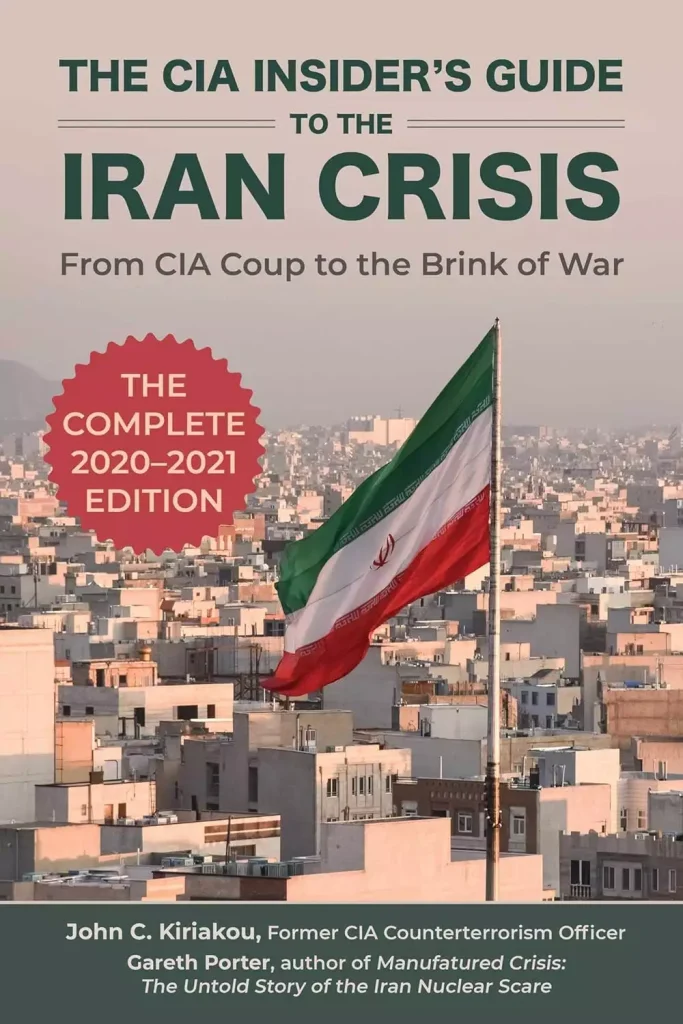
The CIA Insider’s Guide to the Iran Crisis: From CIA Coup to the Brink of War
Written by John Kiriakou and Gareth Porter, this book focuses on how politically-motivated false narratives have influenced U.S. international policy and changed reality as we know it.
Why did the CIA overthrow Iran’s democratically elected government? And why has the United States treated Iran as one of its biggest enemies for four decades? Is the Trump administration’s “Maximum Pressure” campaign working, or will it precipitate a war with Iran?
In The CIA Insider’s Guide to Iran: from CIA Coup to the Brink of War, former CIA Officer John C. Kiriakou and investigative journalist and historian Gareth Porter explain how and why the United States and Iran have been either at war or threatening such a war for most of the forty years since Islamic Republic of Iran was established. The authors delve below the surface explanations for the forty-year history of extreme U.S. hostility toward Iran to blow up one official U.S. narrative after another about Iran and U.S. policy.
Against the background of Iran’s encounters with heavy-handed British and Russian imperialist control over its resources, this book shows how the U.S. began its encounter with Iran by clearly siding with British imperialism against Iranian aspirations for control over its oil in its 1953 overthrow of the Mossadegh government, then proceeded to actively support the Saddam Hussein regime’s horrific chemical war against Iran.
The book shows how a parade of politically-motivated false narratives have taken U.S. Iran policy progressively farther from reality for three decades and have now brought the United States to the brink of war with Iran. It explains how Donald Trump’s trashing of the nuclear deal with Iran and seeking to cut off Iran’s oil exports creates a very high risk of such a war, demanding major public debate about changing course.
The CIA Insider’s Guide to the Iran Crisis also includes appendices with key official documents on U.S. policy toward Iran, with particular emphasis on the major official statements of the Trump administration’s “Maximum Pressure” strategy.
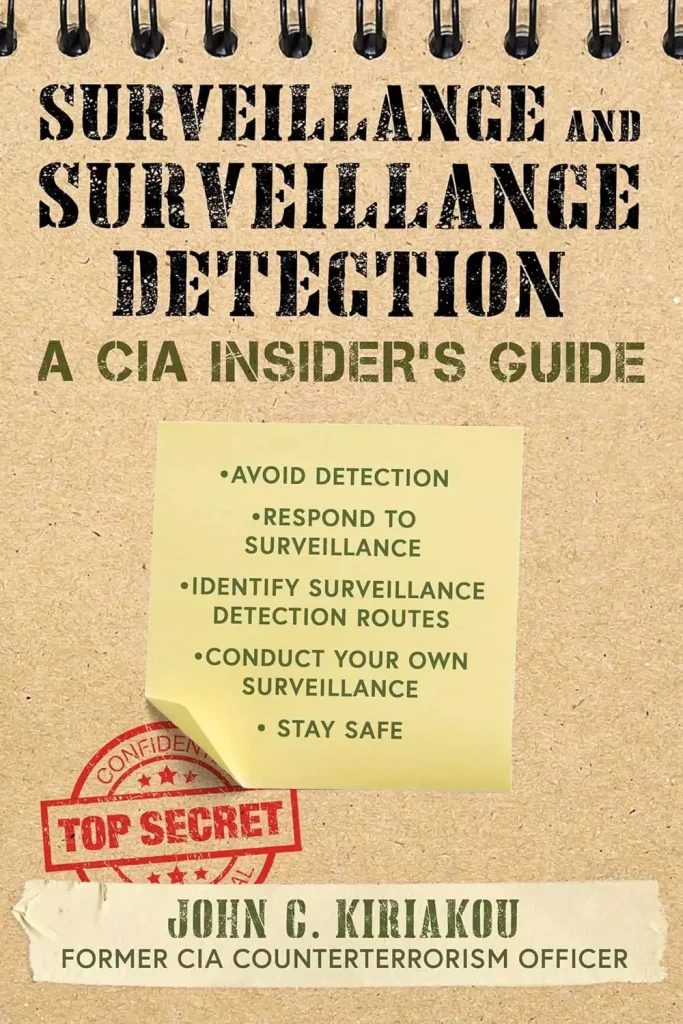
Have you ever thought you were being followed or watched? Have you ever needed to follow or observe someone and not be seen?
In the world of espionage, surveillance and surveillance detection are a way of life. It is the job of every CIA operations officer to make sure he or she is not under surveillance—that is, being followed to the commission of an “operational act.” It is also the job of every CIA operations officer to surveil his own targets, whether they are terrorists or terrorist suspects, foreign intelligence officers, hostile actors, or even sometimes his own agents for vetting purposes.
In everyday life, many people from all walks of life need to know how to perform similar operations. Whether avoiding a stalker, checking up on an unfaithful partner, or just securing one’s own privacy, a working knowledge of modern surveillance and surveillance detection techniques is a critical skill to possess. And there is nobody better to teach that skill than someone trained by the CIA.
From former CIA counterterrorism officer John C. Kiriakou, Surveillance and Surveillance Detection: A CIA Insider’s Guidetakes you through the CIA’s surveillance and surveillance detection program. It will teach you to apply CIA surveillance techniques to your own everyday life. You’ll learn how to stay safe, to ensure your privacy, and to keep the honest people honest—the CIA way.
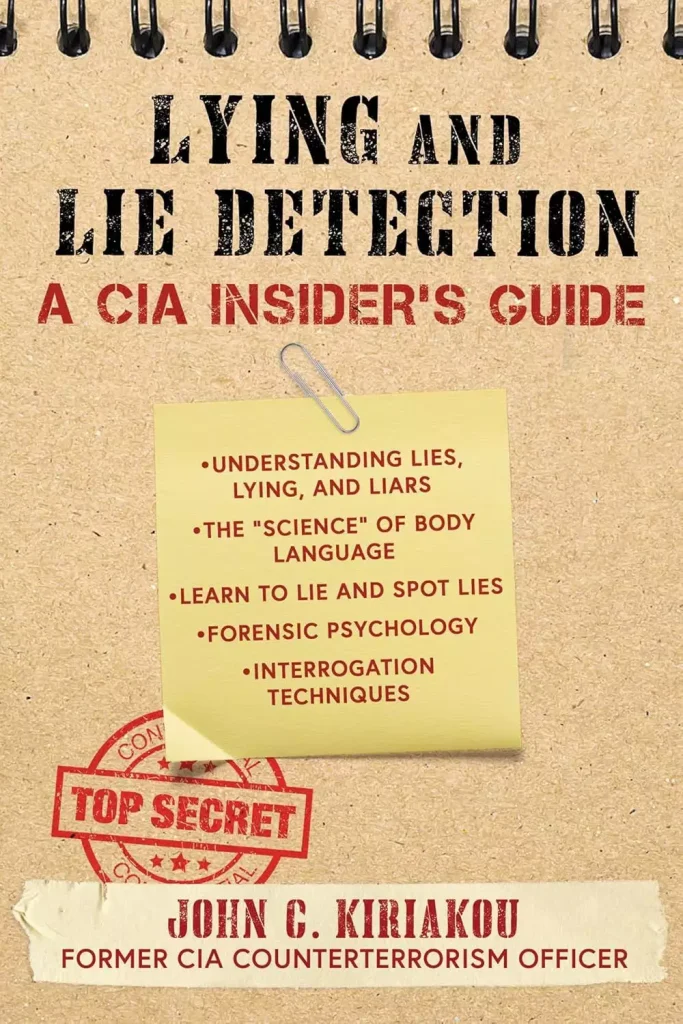
A foolproof guide both to lying and to detecting deception,Lying and Lie Detection: A CIA Insider’s Guide will teach you how the pros can tell if and when somebody is lying.
People lie all the time. Studies show that the average American lies between six and twenty times a day. Most lies are of the “little white” variety or are meant to spare a person’s feelings. But what about the big lies? What about the consequential ones? You have a right to know when somebody is lying to you.
Now, imagine if you had the tools to spot a lie from the truth—a guide to perfect your sixth sense. Whether it’s finding out if you truly got the job, unmasking an infidelity, or a simple recommendation, you will no longer have to spend hours, days, or even weeks pondering about it.
Through the easy-to-follow instructions and professional anecdotes in Lying and Lie Detection: A CIA Insider’s Guide, you’ll learn to lie and spot lies from John Kiriakou, a former CIA counterterrorism officer and senior investigator for the Senate Foreign Relations Committee responsible for the capture of Abu Zubaydah.
Remember, CIA operations officers are trained to lie. They lie all the time. When they are working undercover, they are actually living a lie. With the CIA as a teacher, you’ll learn how to tell.

With an experienced CIA officer as your teacher, you’ll gain the knowledge and necessary tools to protect yourself and the ones you love.
No matter where we go, we leave tracks and clues of our existence without even knowing. Our electronic footprint becomes our invisible trail. In this day in age where the world seems to be at our fingertips and social media plays a huge role in our daily lives, it’s hard not to leave part of our digital selves for others to find.
Whether you’re fascinated by the idea of disappearing, want to erase your digital footprint, or simply concerned about your safety and privacy, knowing how to become invisible is a survival skill that will come in handy.
Through the easy-to-follow instructions, tips, tricks, and professional anecdotes in How to Disappear and Live Off the Grid: A CIA Insider’s Guide, you’ll learn to vanish without a trace from John Kiriakou, a former CIA counterterrorism officer and senior investigator for the Senate Foreign Relations Committee responsible for the capture of Abu Zubaydah.
The Ultimate Guide to CIA Skills, Tactics, and Techniques
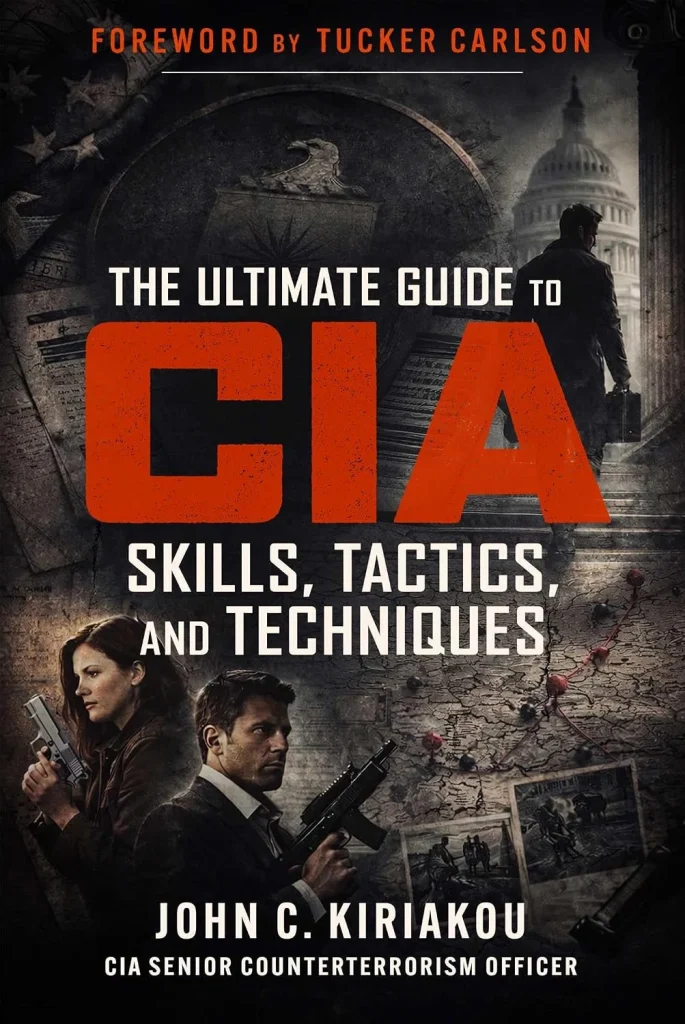
Have you ever thought you were being followed or watched? Have you ever needed to follow someone without being seen? Do you ever worry about the digital tracks you leave behind—or wonder how to vanish without a trace? Have you ever wished you could spot when someone is lying to you?
There is a shadowy world of espionage, surveillance, countersurveillance, digital invisibility, deception, and lie detection where essential skills are valuable. Former CIA counterterrorism officer John Kiriakou offers CIA insider techniques to everyday life.
Whether you’re protecting your privacy from a stalker, verifying a partner’s fidelity, securing your personal safety, erasing your electronic footprint, disappearing off the grid, or simply needing to know when you’re being deceived, this guide equips you with professional tools and methods.
- Part I: Lying and Lie Detection offers a foolproof method to lie effectively (as CIA officers are trained to do undercover) and detect deception like a pro—whether it’s unmasking big consequential lies, spotting infidelity, confirming a job offer, or sharpening your sixth sense so you no longer waste time wondering.
- Part II: How to Disappear and Live Off the Grid provides easy-to-follow instructions, tips, tricks, and anecdotes to help you vanish without a trace, minimize your digital presence, and become truly invisible when safety or privacy demands it.
- Part III: Surveillance and Surveillance Detection teaches you to detect if you’re being followed, apply CIA-grade surveillance techniques in daily scenarios, stay safe, safeguard your privacy, and keep honest people honest.
With an experienced CIA officer as your guide, you’ll gain the knowledge and practical skills to protect yourself and your loved ones—mastering privacy, evasion, and truth-detection the CIA way.
Networking Like a Spy, is a revolutionary guide that combines the strategic acumen of espionage with the practical world of professional networking. Written by the renowned John D. Kiriakou, a longtime CIA officer, this book offers readers a unique approach to building and nurturing professional relationships.
You will discover how to apply the cunning and strategy of a master spy to your networking efforts. Spread across five short and simple sections, each tip is meticulously crafted to guide you through the process of creating meaningful, lasting professional connections.
Highlights:
- Goal-Oriented Networking: Learn how to set clear, strategic objectives for every networking opportunity, just like a spy on a mission.
- Practice Makes Perfect: Gain insights into honing your networking skills in low-pressure environments, building confidence that translates to higher stakes situations.
- Engage and Connect: Uncover the secrets to genuine engagement, where showing authentic interest in others can turn simple conversations into powerful connections.
- Be Unforgettable: Master the art of being interesting, weaving your unique experiences into conversations that leave a lasting impression.
- The Art of Follow-Through: Discover the critical importance of follow-up, turning brief encounters into enduring professional relationships.
“Networking Like a Spy” is more than just a guide; it’s a journey into the art of networking. With a blend of spy-themed narrative and actionable advice, John D. Kiriakou provides the tools to transform your approach to networking. Whether you are a seasoned professional or just starting, these five simple tips will revolutionize the way you connect, communicate, and build your network.
Perfect for:
- Professionals seeking to expand their network
- Entrepreneurs looking for meaningful business connections
- Individuals wanting to improve their interpersonal skills
- Anyone interested in a fresh, strategic approach to networking
Embark on this mission to transform your networking skills and navigate the professional world with the stealth and wisdom of a spy. Your journey to becoming a master of networking begins here!
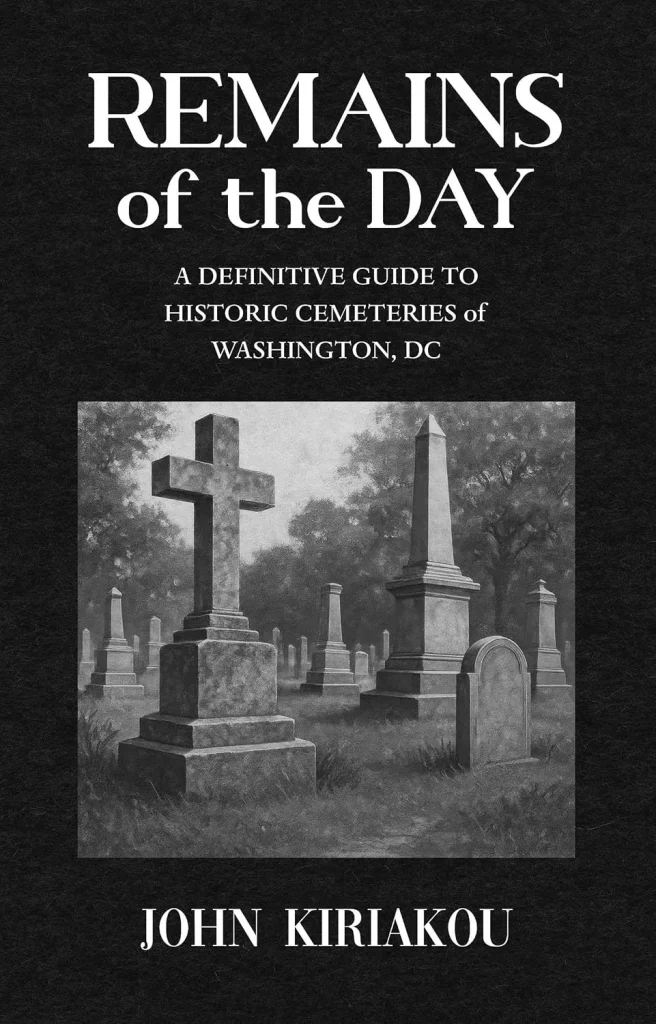
Every grave sells a story and in Washington, DC, the stories are monumentally amazing.
From Civil War generals to queer activists, infamous socialites to pioneering inventors, the historic cemeteries of Washington, DC are home to the colorful lives—and complicated legacies—of the people who shaped the nation’s capital. In Remains of the Day, former CIA officer turned historian John C. Kiriakou takes readers on a compelling and unconventional tour through the burial grounds of the District, revealing fascinating biographical sketches and forgotten chapters of American history.
With rich detail and wry insight, Kiriakou explores the architecture, symbolism, and secret histories hidden among tombstones, mausoleums, and cenotaphs. Whether it’s the grave of a disgraced French prime minister, the final resting place of Robert F. Kennedy’s campaign manager, or the haunting epitaph of a defiant LGBTQ veteran, these pages chronicle a city of the dead that tells us more about the living than any official monument.
Part guidebook, part biography, and part social history, Remains of the Day is an unforgettable celebration of the people—famous and obscure, beloved and reviled—who made Washington what it is today.
Essential for history buffs, tourists, genealogists, and anyone who’s ever wandered a cemetery and wondered, “What happened here?”
Available August 25, 2026